

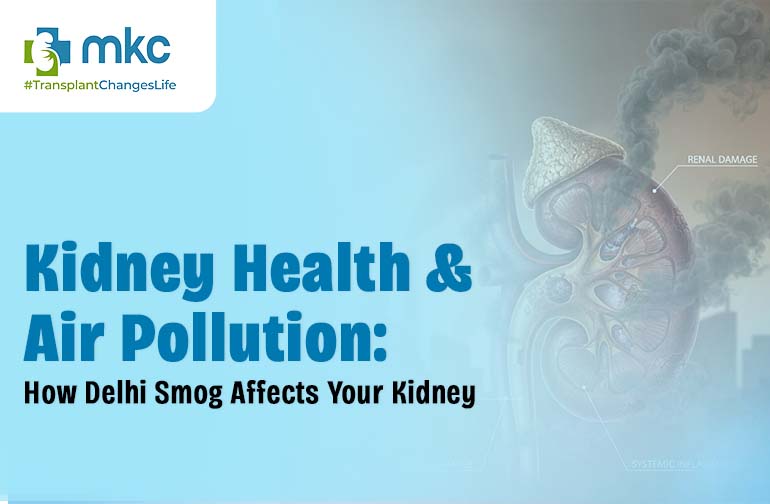
Every winter, the air in Delhi grows worse. Most people think of lung problems, coughing, burning eyes, or trouble breathing right away. But not many people know that air pollution can affect your kidneys, frequently without you knowing it and more than you might imagine.
Your kidneys filter poisons out of your blood all day long. Your kidneys have to work harder to get rid of pollutants when the air is polluted. Over time, this can put stress on the kidneys, causing them to swell, and make you more likely to acquire chronic kidney disease (CKD).
Let’s find out how smog affects the health of your kidneys and what you can do to stay safe.
How dirty air damages your kidneys
- Pollutants enter the blood stream
When you breathe in polluted air, tiny particles like PM2.5, nitrogen dioxide, and heavy metals go from your lungs into your blood.
When they get into the blood, they go to the kidneys, which have to filter out more toxins than normal.
- Swelling in the tissues of the kidneys
Pollutants can make the body swell up, even in the kidneys.
Chronic, low-grade inflammation makes it tougher for the kidneys to filter blood over time.
- A higher risk of developing hypertension
People who live in areas with a lot of air pollution tend to have higher blood pressure.
High blood pressure is a key cause of kidney disease, which makes it harder for the kidneys to work.
- Oxidative Stress Damages Kidney Cells
Pollution increases oxidative stress, which is when free radicals hurt healthy kidney cells.
This could make the kidneys work less well over time.
- Making kidney problems worse
People with CKD, diabetes, or high blood pressure may find that their symptoms get worse when there is a lot of pollution in the air.
You can find it harder to breathe, feel weary, and keep fluids in.
Who Is at Higher Risk?
- Individuals with preexisting renal disease
- People with diabetes or high blood pressure
- Older people
- People who are outside for long periods of time
- People who don’t drink enough water
- Patients who have had transplants (and have weaker immune systems)
Things You Shouldn’t Ignore When Pollution Levels Are High
If you have these symptoms, especially during smog season, see a renal doctor right away:
- Swelling in the face or feet
- Unusual tiredness
- Changes in how often you pee
- Breathlessness
- Headaches that don’t go away
- High blood pressure rises
- Early testing helps keep the kidneys working well for a long time.
- Wear a mask when you’re outside to protect your kidneys during smog season.
Pick masks with N95 or N99 filtration, especially when pollution levels are high.
- Drink enough water
Your kidneys work better when you drink enough water.
- If you can, use an air purifier indoors.
It lowers the amount of pollutants in your home.
- Spend less time outside
When smog levels are highest, try not to go out in the morning or late at night.
- Eat a diet that is good for your kidneys.
Cut down on processed foods, salty foods, and snacks that are too sweet.
- Keep an eye on your blood sugar and pressure levels.
Pollution can make both worse, which can hurt the kidneys.
- People who are at risk should get their kidneys checked regularly.
You can keep an eye on your kidneys’ health with a simple blood pressure check, urine test, and creatinine test.
Conclusion
Polluted air doesn’t just affect your lungs; it also hurts your blood and kidneys.
In a city like Delhi, it’s crucial to know about this link for your health in the long run.
Drinking enough water, staying inside as much as possible, and checking your blood pressure and kidney function often will help minimize your risks on days when there is a lot of pollution.
You can get in contact with the professionals at Madhuban KidneyCare in Pitampura for safe, evidence-based renal care if you want individualized help.