
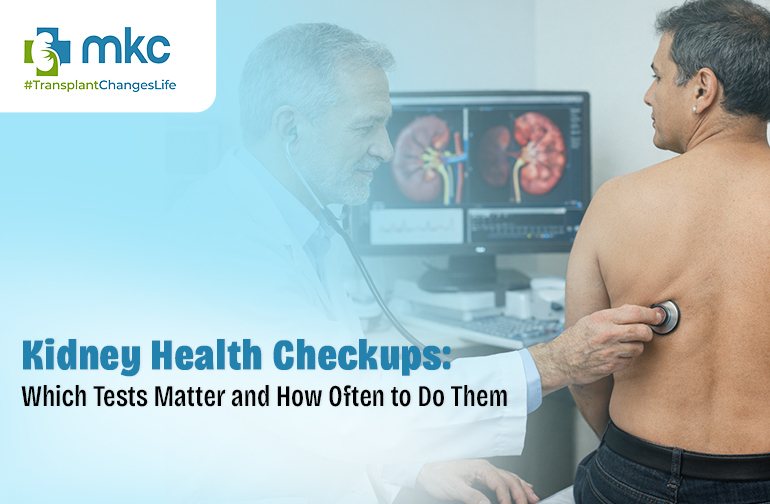
Kidneys are one of the most busiest organs in the human body but it is mostly treated with carelessness! They silently process waste, maintain the balance of bodily fluids, stabilize blood pressure and promote sound metabolism — achievements that largely go without causing any symptoms in the early stages of disease. This is one reason why kidney disease often isn’t caught until a lot of damage is already done.
Screening for kidney health can detect problems early – before you even feel symptoms. Knowing which tests are important and how frequently they should be performed can help to safeguard kidney function and avoid long-term complications.
The Importance of Kidney Health Checkups
Kidney disease often develops silently. A person in the early stages of kidney problems often feels absolutely fine and lives their daily life without realizing how much their kidney function has already deteriorated. By the time there are symptoms (swelling, tiredness, decreased urine output or breathlessness), damage may already be serious.
Screening as part of your regular healthcare can help find small changes in kidney function. Early diagnosis permits timely advice, life-style changes and treatment able to slow or even arrest its evolution in the majority of cases.
Who Should Get Kidney Checkups?
Although it is useful for everyone to have a health check-up at regular intervals, kidney check-ups are especially critical for people with risk factors. These are people who have diabetes, high blood pressure or obesity and those at risk for heart disease or have a family history of kidney disease. Quieter, more prolonged exposure has also been linked, as have long-term use of painkillers; having recurrent urinary infections or kidney stones; and advancing age.
And having one or more of these risk factors means testing the kidneys should not be put off, even if you are feeling well.
Tests That Are Important for Kidney Health
The process for a kidney health check is generally not complicated or painful. The vast majority of tests are simple, cheap and plentiful.
Serum creatinine is one of the most vital blood tests. Creatinine is a waste product filtered by the kidneys; higher levels in blood suggest less kidney function. In conjunction with creatinine, the estimated Glomerular Filtration Rate (eGFR) is calculated by doctors to give a better idea of how well kidneys are filtering blood. Reduced eGFR (with or without symptoms) may indicate early kidney disease.
Urine testing is equally essential. A urine test can also tell if the excretion of protein, blood or some other anomalies. Proteinuria, or the presence of protein in the urine, is one of the earliest and most sensitive indicators for kidney injury. A urine albumin/creatinine ratio (ACR) will rule out small protein leaks, all the more so if you have diabetes or hypertension.
Blood-pressure readings are also essential in kidney checkups. Chronic kidney disease can lead to high blood pressure, and high blood pressure can damage the kidneys, so it’s a vicious cycle. Just keeping an eye on your blood pressure goes a long way toward breaking this cycle early.
If you have or are at high risk for diabetes, either due to a family history or other reasons, it is recommended to get your blood sugar levels checked from time to time as uncontrolled sugar has been linked with damaging of kidneys.
If structural abnormalities or genetic diseases of the kidneys are suspected, the doctor may request an ultrasound of the kidneys. This painless imaging test can help determine the size and shape of the kidneys, as well as whether there are any blockages, stones or cysts in them.
What Is the Frequency of Kidney Testing?
How often to get your kidneys checked varies depending on how much one is at risk.
For healthy adults free of known risk factors, screening for kidney disease can also be sent at the time of a general health checkup every one to two years.
Diabetics and those with high blood pressure should have their kidneys checked at a minimum every year. In some instances, physicians may recommend closer monitoring depending on results and disease management.
People with a family history of kidney disease, prior kidney trouble or early test abnormalities may need checkups as often as every three to six months. The routine is tailored according to the patient history and kidney function of the moment.
The key is consistency. Providers observing trends over time, as opposed to instant test results is made possible only through routine monitoring.
Signs Warranting Immediate Testing
But even in-between those routine checkups, there are some symptoms that should never be ignored. When people start to experience bloating in the face or feet and around the eyes, foamy urine, getting up multiple times per night to urinate or are excessively tired without reason these could be signs that their kidneys are under stress and should be evaluated right away.
These symptoms are not an automatic cause for concern about kidney disease, but testing can rule it out as a serious cause.
Does Early Screening Even Matter?
Yes. While not all kidney diseases can be treated, early diagnosis can make a big difference in how treatments work. With appropriate medical treatment, dietary adjustments and control of underlying conditions such as diabetes and hypertension, much kidney damage can be slowed.
“Simple things like watching salt, drinking enough water, not taking unnecessary painkillers if you can avoid it and keeping a healthy weight are important.” It’s being proactive that works.
Making Kidney Checkups a Habit
Rather, kidney health should be considered a long-term endeavor, not a one-time test. Making kidney checks part of routine health checks can help to make preventive care business as usual and limit the chances of late diagnosis.
Talking with a doctor about how often to get screened will ensure that the testing is personalized for what’s happening in your life and not just following generic guidance.
Conclusion
Kidney health screenings are a small gesture that can have lasting impacts on overall health. Understanding which tests are important — and when to get them — can help people take charge of their kidney health before problems become critical.
If you have risk factors, symptoms or a family history of kidney disease, don’t wait for warning signs. Early assessment and intervention can have a long term impact.
For ethically driven & scientific based patient-focused kidney care contact the experts of Madhuban Kidney Care in Pitampura.
📞 Phone: +91 78278 90989 / +91 78400 07989
📍 Location: ED 3A, Madhuban Chowk, Pitampura, New Delhi